
SOCAL ENERGY CONSULTATION
Lock In Your
Energy Independence
Shield your household from aggressive utility rate increases. California’s average residential electricity price increased about 97.8% from 2014 to 2024 (EIA annual averages: 15.31¢/kWh → 30.29¢/kWh). Solar + battery can help you move to a more predictable energy plan instead of unpredictable utility hikes.
Zero cost consultation · No commitment · Customized solar modeling
★★★★★ 4.9/5 Rating from over 1,200+ Southern California property owners
SOUTHERN CALIFORNIA RATE REALITY
The True Cost Of
Doing Nothing
For Southern California homeowners, electric rates and rate structures can change over time—creating long-term uncertainty. For statewide context, California’s average residential electricity price increased about 97.8% from 2014–2024 (EIA annual averages: 15.31¢/kWh → 30.29¢/kWh; source). For utility-specific schedules in our region, see Southern California Edison (SCE) historical tariff schedules (SCE Tariff Books – Historical Rates).
Utility payments don’t build an asset. If you purchase solar (cash or loan), you generally own the equipment. With a Solar PPA, customers generally do not own the equipment—they purchase the electricity the system produces under the agreement terms.
- SCE rate schedules show major increases over time (see historical rate schedules: SCE Tariff Books)
- Aggressive summer peak pricing can increase costs for high evening usage
- Utility bill payments are a sunk cost (no ownership/equity)
Objective Southern California rate review : No obligation
- SCE rates up about 89.9% over the last decade (2014–2024) based on published historical rate schedules
- Peak pricing can increase costs for evening usage (4–9 PM)
- Utility bill payments don’t build an asset; future rates can change
- Starting per‑kWh rate set in your agreement with a 3.5% annual escalator (disclosed upfront)
- You purchase the electricity generated by the solar system at the rate outlined in your agreement; battery storage may be included depending on approved design
- PPA customers generally do not own the equipment (program-specific); ownership differs for cash/loan purchases
HARDWARE ARCHITECTURE
A Complete
Power Ecosystem
Precision hardware engineered to harvest daylight, buffer reserve power, and intelligently dispatch electricity when utility rates surge.
Equipment note: Equipment brands and models can vary by project availability, homeowner qualifications, and system design. Final equipment specifications are confirmed before installation.
Equipment brands:
Tesla
Enphase
Qcells
SolarEdge
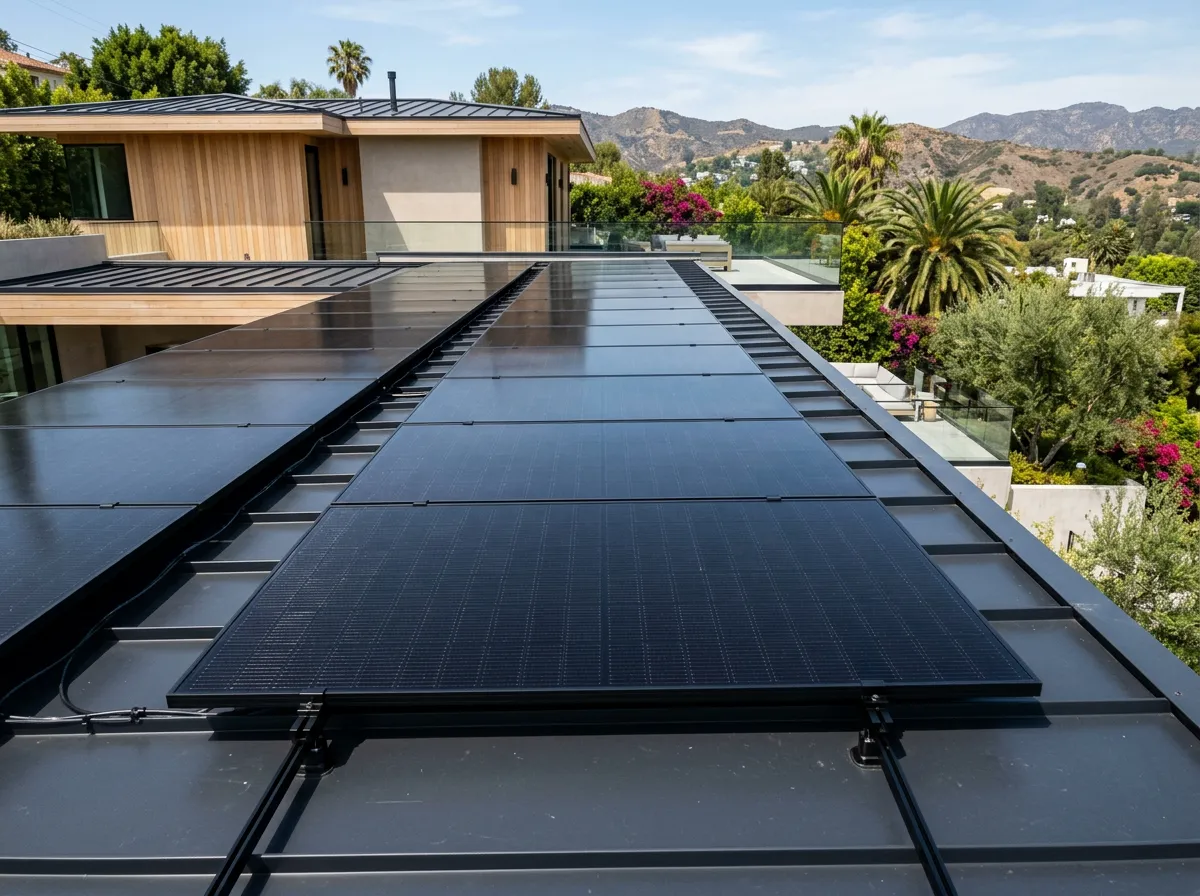
GENERATION LAYER
Q CELLS Black-on-Black Panels
Engineered with advanced half-cut N-type cell architecture to capture maximum photons under intense Southern California sun, sustaining superior yield across 25+ years.
- Up to 22.8% operational module efficiency
- Superior high-temperature degradation coefficient
- Low-profile architectural black frames

RESILIENCE CORE
Tesla Powerwall 3 Backup
Tesla Powerwall 3 is a home battery that stores energy from solar or the grid, and can support your home during an outage when designed with the appropriate backup equipment.
- Energy capacity: 13.5 kWh
- Continuous power: up to 11.5 kW

STORAGE POTENTIAL
Qcells Q.HOME CORE Battery
Qcells Q.HOME CORE is an energy storage system designed for backup-capable home energy storage (configuration dependent). It supports remote monitoring and is built around an LFP battery platform.
Important: Exact specs depend on the approved configuration we’re offering for your home. We confirm the final equipment and specifications before installation.
- Stored energy: ~13.1 kWh (single cabinet, model dependent)
- Backup power: 7.6 kW continuous output
- Chemistry: LFP (lithium iron phosphate)
- Expandable: up to ~26.2 kWh / 15.2 kW with an additional cabinet (configuration dependent)
FINANCIAL OPTION SELECTOR
Solar Options That
Fit Your Home & Budget
Transparent solar pathways calibrated for Southern California properties. Compare zero-out-of-pocket agreements, asset-equity purchases, and incentive-aligned lending options tailored to your qualifications.
Financing and program providers:
GoodLeap
EnFin
Sunrun
NO UPFRONT COST
Solar PPA (Featured Option)
Featured for qualified homeowners: With a Solar PPA, you purchase the electricity generated by the solar system at the per‑kWh rate outlined in your agreement—with a 3.5% annual escalator disclosed upfront. Battery storage may also be included depending on your approved system design. The provider generally owns, monitors, and maintains the equipment (program-specific).
- No upfront equipment purchase cost for qualified homeowners (program-specific)
- Per‑kWh pricing and any annual escalator are disclosed in the agreement (often 3.5%)
- Monitoring, maintenance, and replacements handled for the term (program-specific)
- Agreement transfer options are reviewed during your consultation (program-specific)
CASH OPTION
Direct Cash Purchase
Cash purchases can provide long‑term savings, but returns depend on system cost, electricity usage, utility rates, and available programs at the time of installation.
- Potential long‑term savings (depends on system cost, usage, and utility rates)
- No federal tax credit assumed in cash projections
- Equipment ownership (program/contract dependent)
- No ongoing financing payments (if paid in full)
CALIFORNIA INCENTIVES
Propel Clean Energy Loan
Secure solar ownership with predictable monthly installments structured to coordinate with regional California clean energy rebate timelines.
- Ownership pathway with structured monthly payments (for qualified applicants)
- Terms, rates, and monthly payments depend on credit/eligibility and system design
- Incentives and credits can change—your assessment will review what’s currently available
- Prepayment options and any fees are lender-specific
Every home features unique electrical consumption patterns and solar exposure. Exact qualification and monthly metrics are finalized during your customized engineering assessment.
HOW IT WORKS
A Seamless Transition
From your initial assessment to flipping the power switch, our dedicated Southern California engineering team manages every milestone with zero guesswork.
Complete Turnkey Coordination: We coordinate permitting, applicable HOA documentation, and the utility interconnection requirements to make your transition to solar as simple as possible.
BATTERY 101
Understand Your Home Battery Tech
Energy storage is an essential component of modern residential resilience. Cut through marketing jargon and explore how home battery systems actually store, safeguard, and deliver clean power.
Usable vs. Total Capacity
Nameplate rating is the total chemical energy held inside cells, but usable capacity represents the actual kilowatt-hours (kWh) available to run household appliances safely without damaging cell chemistry.
Backup & Critical Loads
During grid outages, an automated transfer switch isolates your home within milliseconds. Power is directed specifically to designated essential circuits like refrigeration, medical equipment, and lighting.
Chemistry & Safety
Tier-one residential storage utilizes advanced Lithium Iron Phosphate (LFP) or high-density NMC chemistry, backed by UL 9540 fire safety certifications and integrated thermal management systems.
Inverter Coupling
Whether coupled via AC for straightforward retrofits onto existing solar arrays or DC for maximum conversion efficiency in new designs, inverters ensure balanced bi-directional electricity flow.
Smart Monitoring & Alerts
Mobile dashboards provide second-by-second visibility into household consumption, grid import prices, storm watch readiness, and reserve margins to maximize daily bill savings automatically.
Load & Runtime Factors
Total runtime during blackouts is governed by active electrical draw, ambient installation temperature, and continuous output limits. Managing heavy AC surges ensures backup longevity.
Note: Equipment brands, models, and specs vary by project availability, homeowner qualifications, and system design; final specs confirmed before installation.
LEARNING CENTER
Empower Your Energy Choices
Make confident, informed decisions with our clear guides on clean energy systems, ownership pathways, utility interconnect regulations, and true battery resiliency.
*Pricing and eligibility vary by homeowner and system design; no guaranteed savings.
Solar PPA Basics
Understand Power Purchase Agreements, third-party system maintenance, and predictable kilowatt-hour rates without system ownership responsibilities.
Cash vs Financed Purchase
Compare direct ownership economics, long-term ROI yields, and financing structures against upfront capital deployment options.
Battery Backup 101
Learn how lithium storage operates during grid outages, covers essential circuits, and arbitrates peak Time-Of-Use utility rates.
Permitting & Timeline
Review standard jurisdictional approval stages, utility interconnection checkpoints, and realistic milestone scheduling expectations.
CLEAR ANSWERS & LOCAL EXPERTISE
Answers For SoCal
Homeowners
Navigating California solar is significantly different than anywhere else in the country. Between NEM 3.0 export structures, aggressive 4 PM to 9 PM utility peak pricing across SCE, SDG&E, and LADWP, and unique regional weather patterns from the coastal marine layer to inland heat waves, technical details matter. Here are clear, upfront facts to help you evaluate battery storage, roof longevity, and long-term home value.
Will solar panel installation compromise or void my roof warranty?
Solar installations use specific mounting and waterproofing methods designed to protect your roof. Applicable roof penetration and workmanship warranties (if available) are dependent on your installation agreement and will be explained before installation. Existing roof warranties should also be reviewed with your roofing provider.
Why is battery storage essential under California NEM 3.0 rules?
Under NEM 3.0, utility credits for excess daytime solar sent back to the grid dropped by roughly 75%. An integrated battery captures that daytime surplus and deploys it between 4 PM and 9 PM, precisely when utility on-peak rates spike past 60 cents per kWh. Without a battery, you lose significant financial value on your daytime generation.
How does battery backup perform during PSPS power outages?
During Public Safety Power Shutoffs (PSPS) or grid failures, an automated islanding gateway instantly disconnects your home from the disabled grid and powers your critical circuits (refrigeration, medical devices, lighting, AC, Wi-Fi) seamlessly. When the sun rises, solar generation continues recharging the battery even while the utility grid stays down.
What maintenance and cleaning is required in Southern California?
Tier-1 monocrystalline panels have zero moving parts and require minimal intervention. However, SoCal's dry summers, Santa Ana winds, and seasonal soot can deposit a fine dust layer. A gentle seasonal rinse with deionized water or garden pressure every six months restores 4% to 7% of lost optical efficiency.
What happens if I sell or remodel my home in the next 5 to 10 years?
Owned or financed solar-plus-storage systems can add value for many homeowners, but outcomes vary by market and system details. If transferring an owned/financed system, the process is typically handled through escrow documentation (program-specific). For PPAs, the equipment is generally owned by the provider and agreements are typically transferred/assumed (program-specific) — we’ll review the exact options during your consultation.
FINAL STEP TO RATE STABILITY
Ready To Gain
Control?
Schedule your complimentary Southern California energy evaluation today. Our local specialists analyze your roof profile and electricity usage to review the options available for your home — including solar and battery options with no upfront equipment purchase cost for qualified homeowners. Availability, pricing, and terms (including any annual escalator such as 3.5%) depend on eligibility and system design, and are disclosed upfront.
- Full utility billing audit to calculate monthly solar offset
- Address pre-qualification for zero-cost installation PPA options
- Customized engineering assessment tailored to your roof structure
100% Free Consultation
Get a personalized solar and battery assessment for your home. We’ll review your electricity usage, roof suitability, and available options (typically 30–60 minutes depending on your questions).
Instant Confirmation • Zero Obligation Required
Empowering Southern California homeowners with objective, data-backed energy consulting and tailored solar transition pathways.
Reviews
★★★★★ “Clear, no-pressure guidance and a smooth process from start to finish.”
★★★★★ “They explained PPA vs. purchase clearly and set expectations upfront.”
★★★★★ “Fast scheduling, thorough answers, and no confusing sales pressure.”
Important Regulatory Notice: SoCal Energy Savings is an independent residential energy consulting brokerage and advisory firm. We are not an electric utility company, public utility provider, or affiliated with Southern California Edison (SCE), San Diego Gas & Electric (SDG&E), Pacific Gas and Electric (PG&E), or any governmental regulatory entity. Solar system qualifications, net billing calculations, and financial outcomes vary based on individual property roof orientation, local shading, credit approvals, and utility tariff rate schedules.
© 2026 SoCal Energy Savings. All rights reserved. | Privacy Policy | Terms of Service